|
|
|
|
Shop
|
|
|
Update 7/26/26: Here are three new originals to delight the eye and unencumber the purse:
Abandon Ship -- A page from our pretty-sexist-even-for-us Battlehookers of Klarn story in Little Black Book Vol. 3.

Bot Jockey -- Does this make up for the above? Probably not. Study for a private commission.

Bender on a Bender
-- Not the actual Bender, although this seems like something he might
consider doing for just a nanosecond. Both Futurama and our study for a
private commission are actually referencing Startling Comics #49 from
1948, so we don't want to be hearing from anybody's lawyers.

Check out more newly available originals here and here.
Update 12/19/25: Please note our current contact and shipping info!
Update 10/4/24: We've added six more new largish to jumbo originals, including our one and only cover for DC, here.
Fallcon 2024 is fast
approaching, so if a given piece is calling to you and you'd like to
eyeball it up-close and personal-like, feel free to drop by our table
at the show, where you'll find most/all of the art shown here nestled
all snug in their sleeves in the F&L Large Original Portfolio.
Update 8/18/24: Have a look at seven new originals, including a giganto Bill the Galactic Hero cover study, here.
We've
been trying to maintain a buyer-friendly shipping rate policy on
purchases of original art, but the USPS never got the memo --
so we'll no longer be able to offer free shipping on original purchases
within the US.
International shipping, as our correspondents across the
water well know, continues to be ridiculous. Don't shoot the messenger,
kids.
Update 2/21/24: Barbiemania
appears to be fading from the national consciousness and we're all the
poorer for that, is what we're probably obligated to say at this point.
But Barbis-mania can be
forever -- at least in the art gallery you never invite your parents
into -- when you acquire a page or two of F&L original art from
Topps' Barbi Twins Adventures. See here for details.
Update 5/9/23: At
this point in our communal economic adventure, you may be asking
yourself, "Is it really a good idea to keep all of one's fundage in a
savings institution, or should one invest a portion in something
F&L would like me to believe is rock-solidly furture-proof -- like
esthetically dubious original art?" While you ponder, here are six new
originals, indicated in the thumbnail title with an "[n]".
Update 6/27/22: Hey kids!
We're still here -- and we've added nine new originals...any of which
will set you back substantially less than that Dark Knight cover.
They're indicated in the thumbnail title with an "[n]".
Update 9/14/15: We've added 15 new originals, including 12 here.
Update 4/12/15: Many of you have been asking, in the kindest way possible, when we're going to add some new originals, for pete's sake...and we have at long last heard you.
Actually, we heard you some time ago, but then we had to go see that Birdman movie everyone is discussing but not seeing or caring about unless they're in the business. Our bad.
Please note that is is but a small representative sample of available
F&L drawings and paintings. If you really want to get a feel for
our inventory, we usually bring three portfolios (one large, two small)
of art to conventions, where we're thrilled to have people peruse, and
ecstatic to have them buy. Mostly, we're just grateful for the
attention.
Still, we realize not everyone can jet into Minneapolis at the drop of
a hat (although we would strongly encourage trying to make it to this show, where you can compare our prices with Neal Adams'!)
You can, if you're of a mind, get in touch anytime about any work you see on our site or in our books. The Pocket Pal collections
and b&w artbooks (such as Bed & Bondage and ZombieSexual), for
example, were specifically designed to showcase available originals.
We avow to get back to you, usually within a day with a jpeg of the
original (if we still have it) and a price quote. This will always cost
you nothing, and we'll be thrilled to hear from you. Also, because
buying an original can be a hefty investment, shipping is usually on
us. (International shipping is another, less happy story -- but we try
to keep those costs as low as possible.)
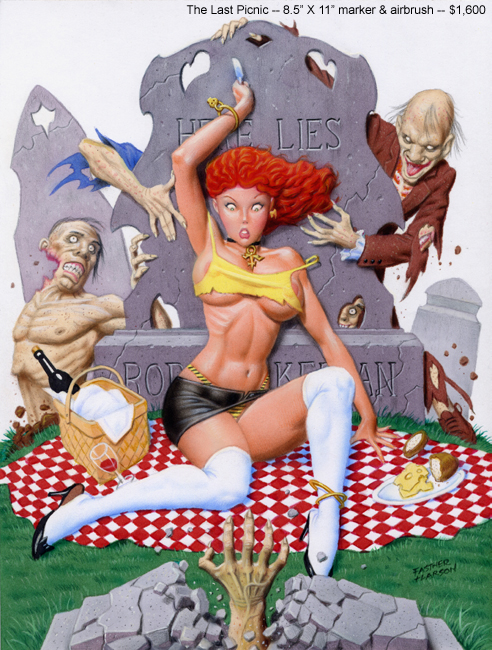
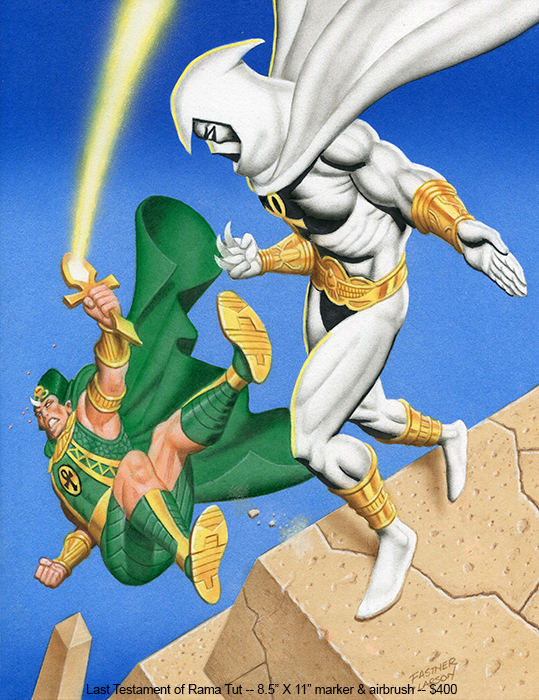
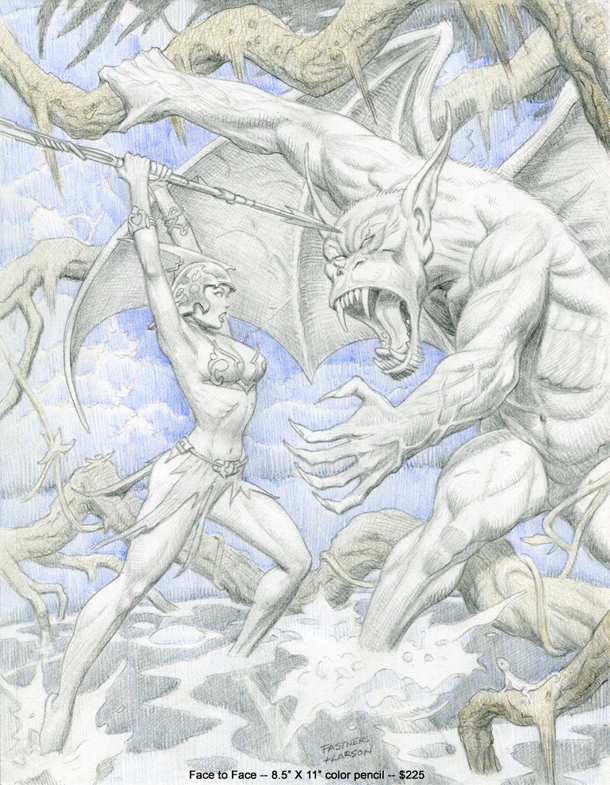
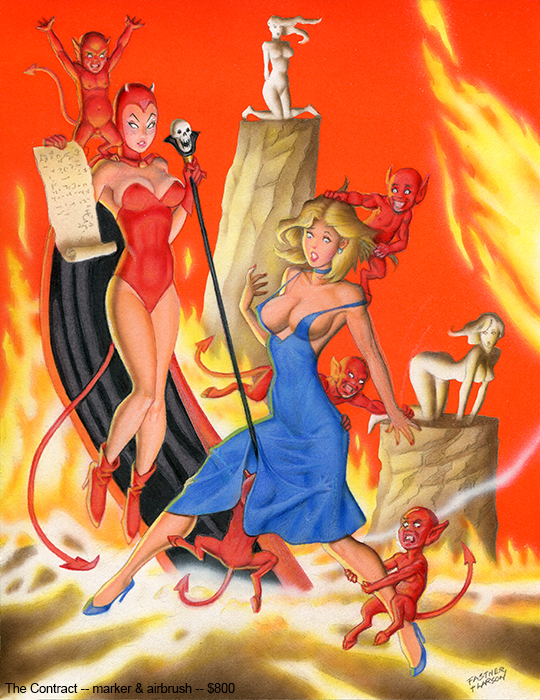
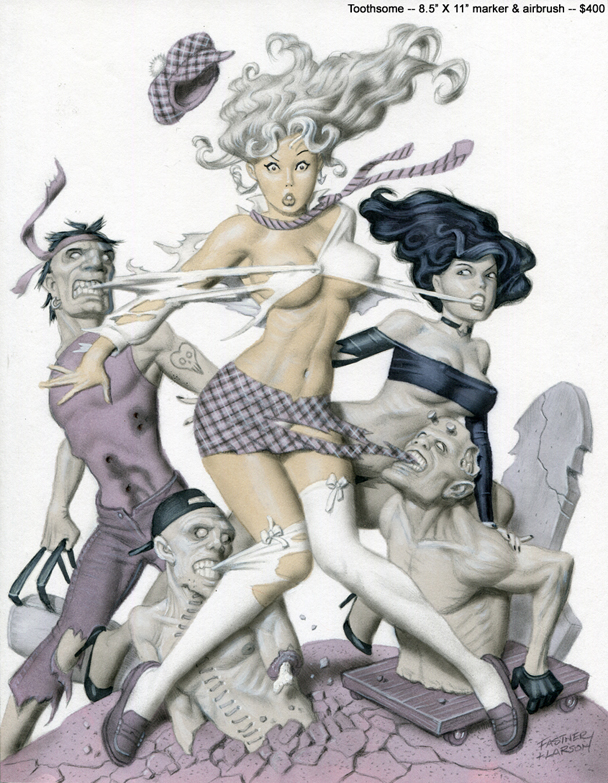
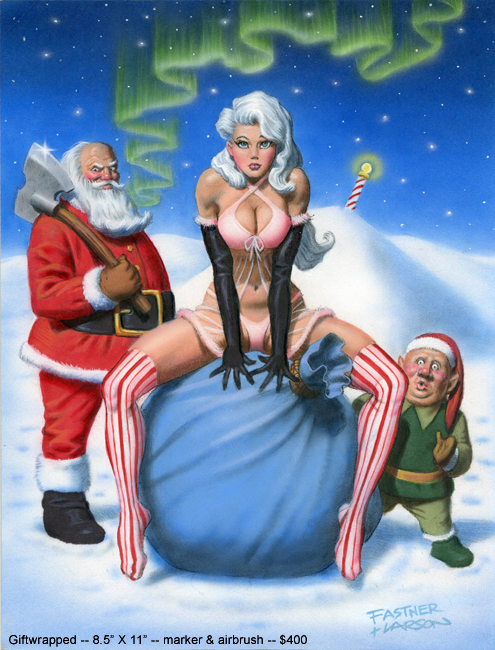
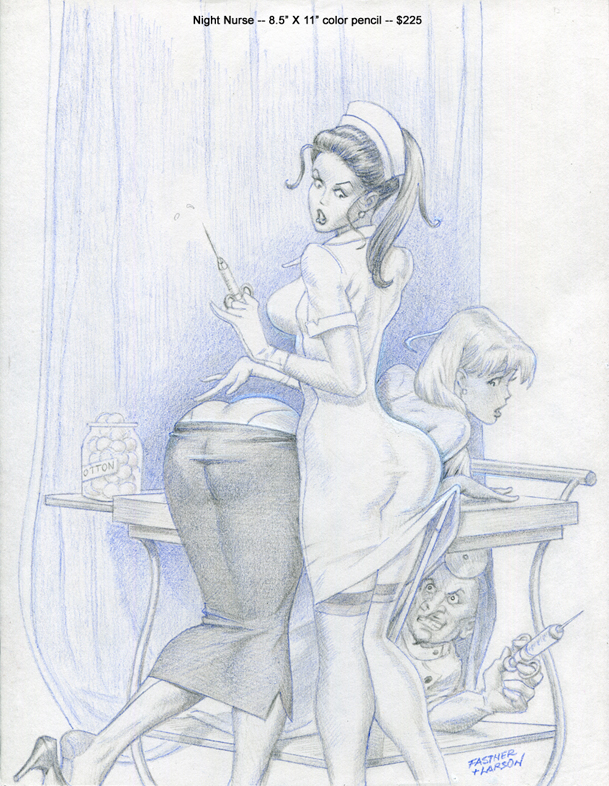
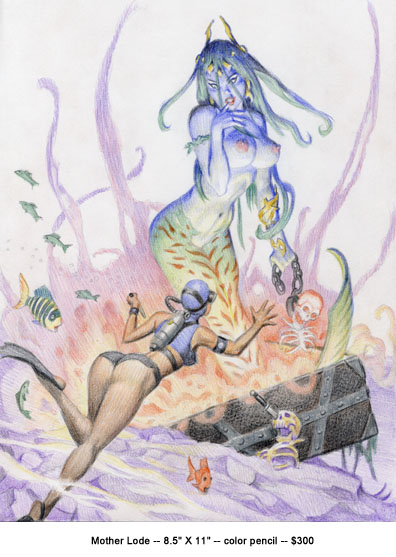
With that in mind, we herewith present 32 new originals, including
finished paintings, marker & airbrush color and grayscale studies,
color pencil studies, and regular pencil drawings. A feast for your
eyes, and -- hopefully -- our woefully undernourished bank accounts!
PH̶
For those advanced souls who may be wondering about the
availability of originals from our Tricks & Treats opus -- all of
those paintings have
been (unfortunately, since we'd love to sell
them again) purchased
from us. We invite you to confab with our pals at SQP for additional information.
In the meantime, have a look at Steve's delightfully
cheeky color
pencil study for T&T's back cover image, "Cauldron", here. Other
color pencil studies, as well as original pencil drawings by Rich, are
also available. If this piques your interest, we're here for you.
We've added a page
of color studies by Steve, and pencil drawings by Rich. If you enjoyed
Tricks & Treats and/or Bed & Bondage, or know someone who does
-- give it a gander.
The originals on these pages are available for purchase
directly from F&L.
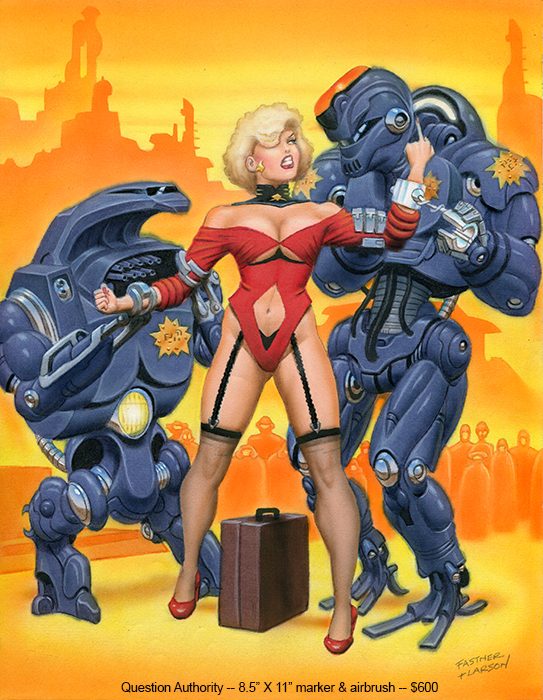
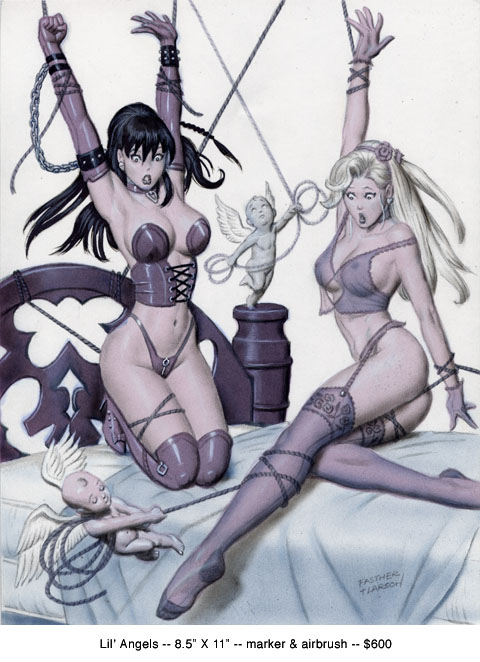
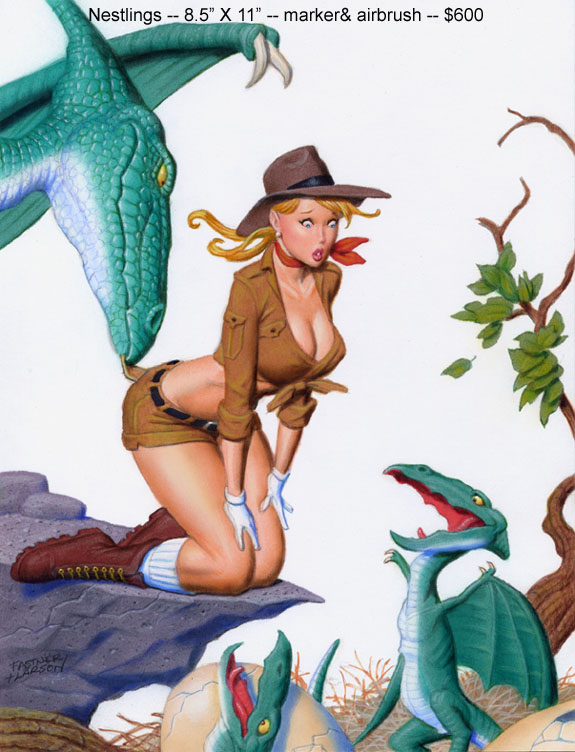
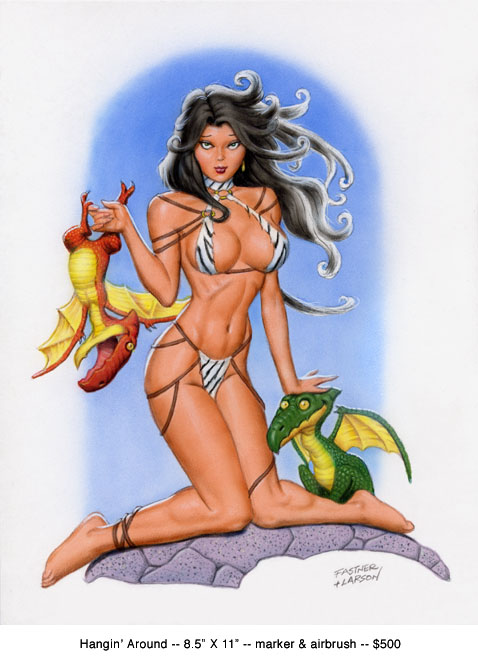
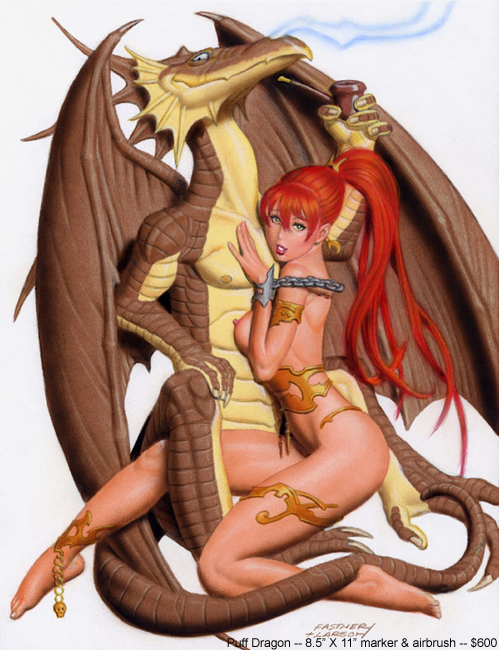
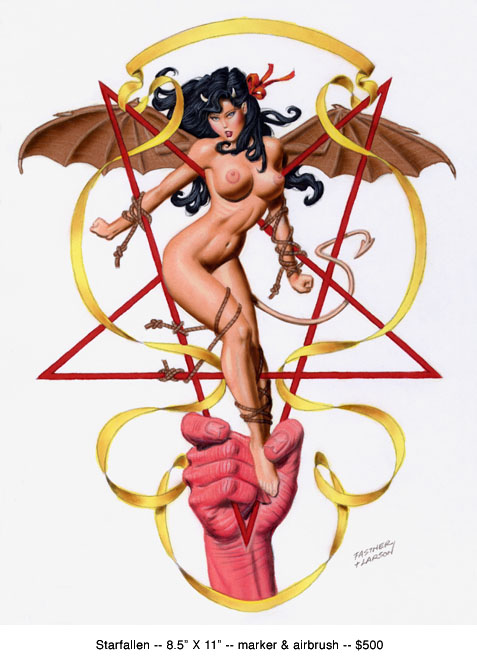
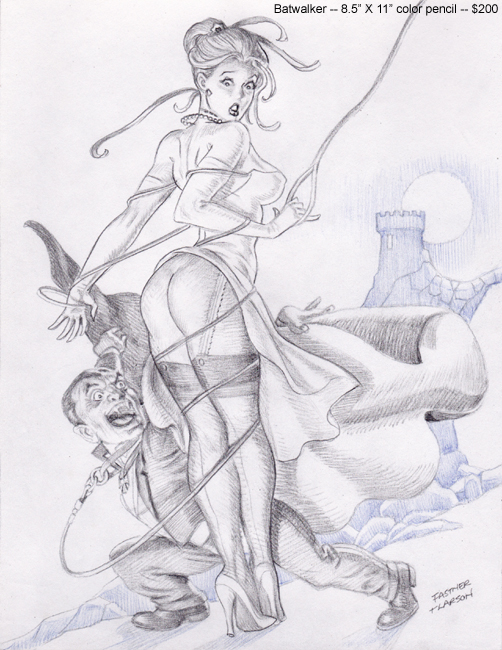
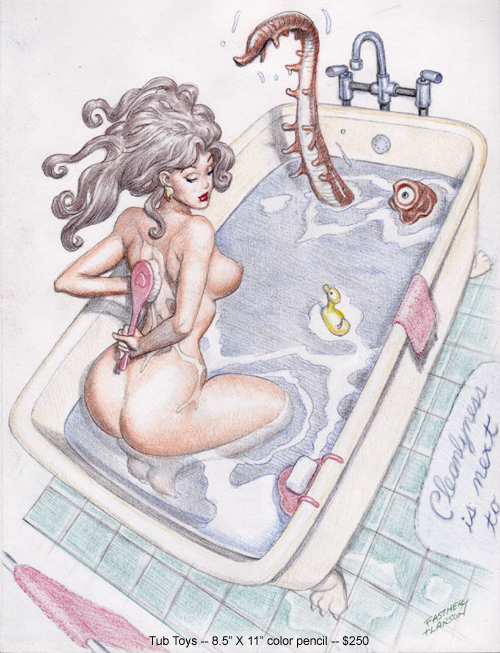
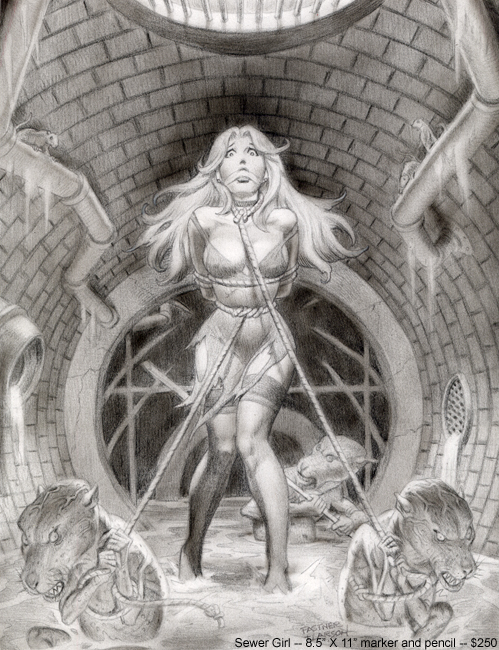
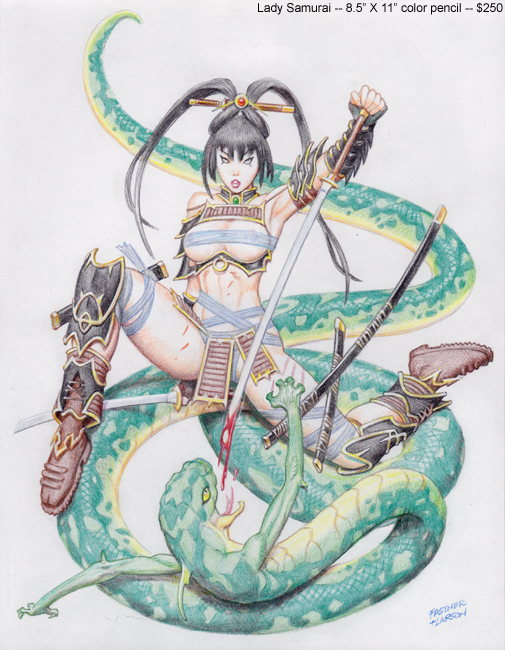
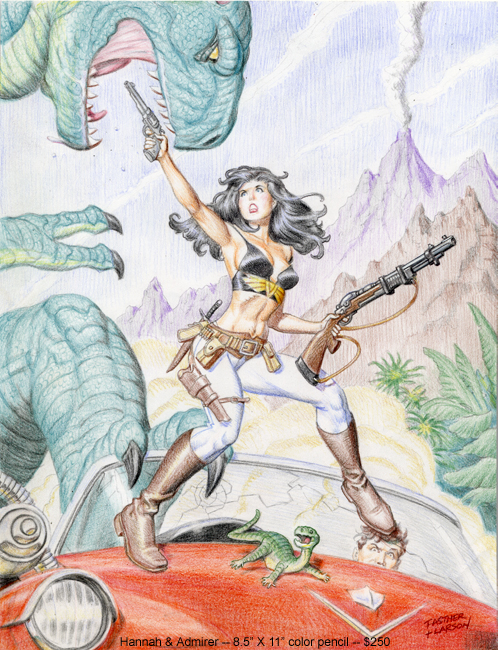
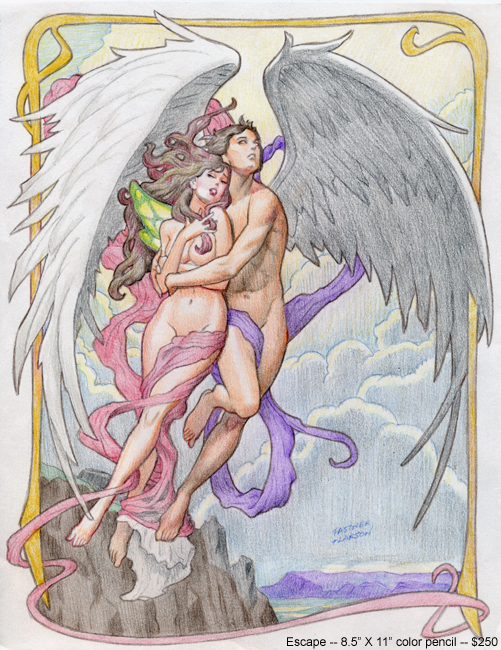
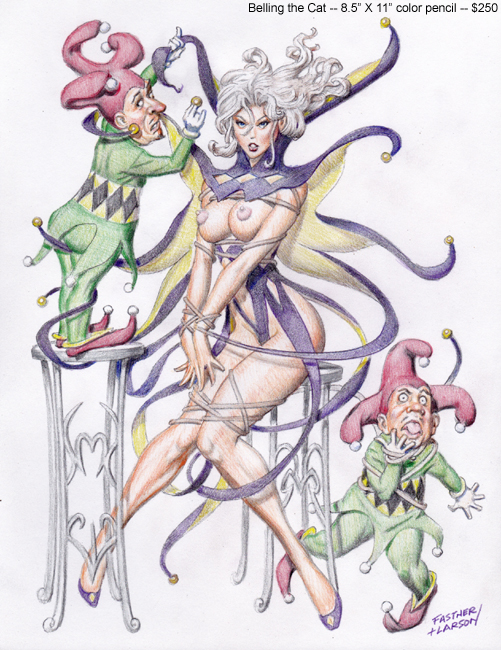
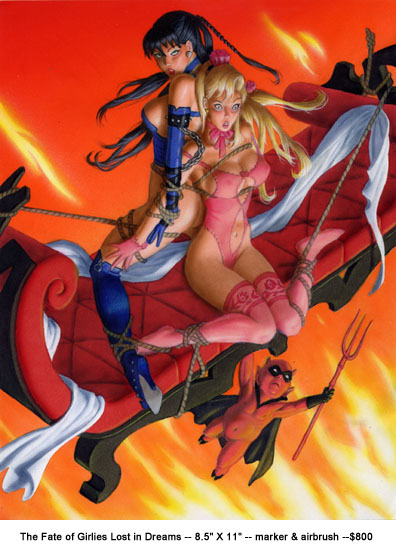
Click on a thumb below for a larger image that includes size, medium
and price info.
More detailed information about the purchasing process is
available on our Shop page.
Everything here is also available internationally, usually via Global
Priority Mail.
We're now able to accept Paypal for most
purchases, so don't be shy about getting in touch
regarding pieces you may be interested in. (We don't share contact info
with anyone. Period.) We check our email a couple of times a day,
usually get back to you within 24 hours, and we'll happily answer any
questions you have:
fastnerandlarson@gmail.com
Update 10/4/24: Six new originals up for sale:
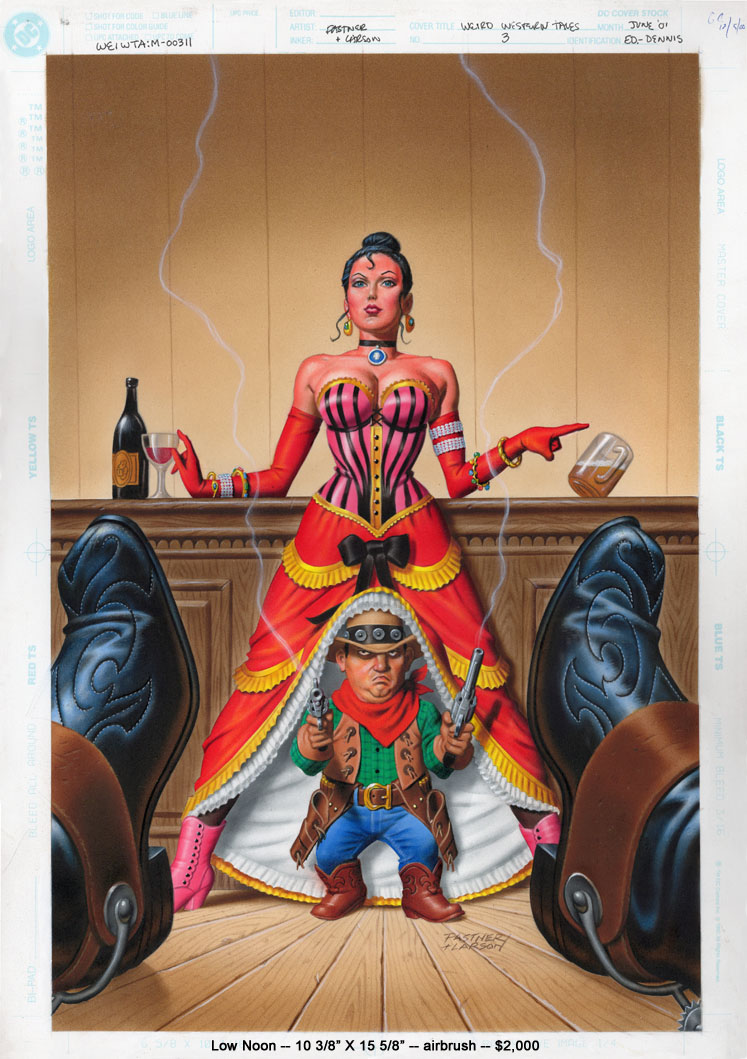
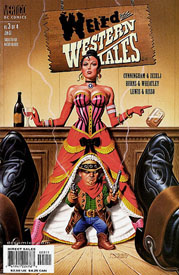
Low Noon -- Our
cover for Weird Western Tales #3 is the only thing we ever did for DC,
and we feel like it lives up (or down; we're not sure) to the title.
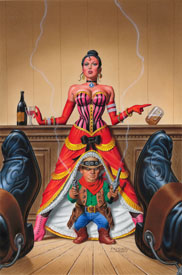
Say hello to my little gunslinger.
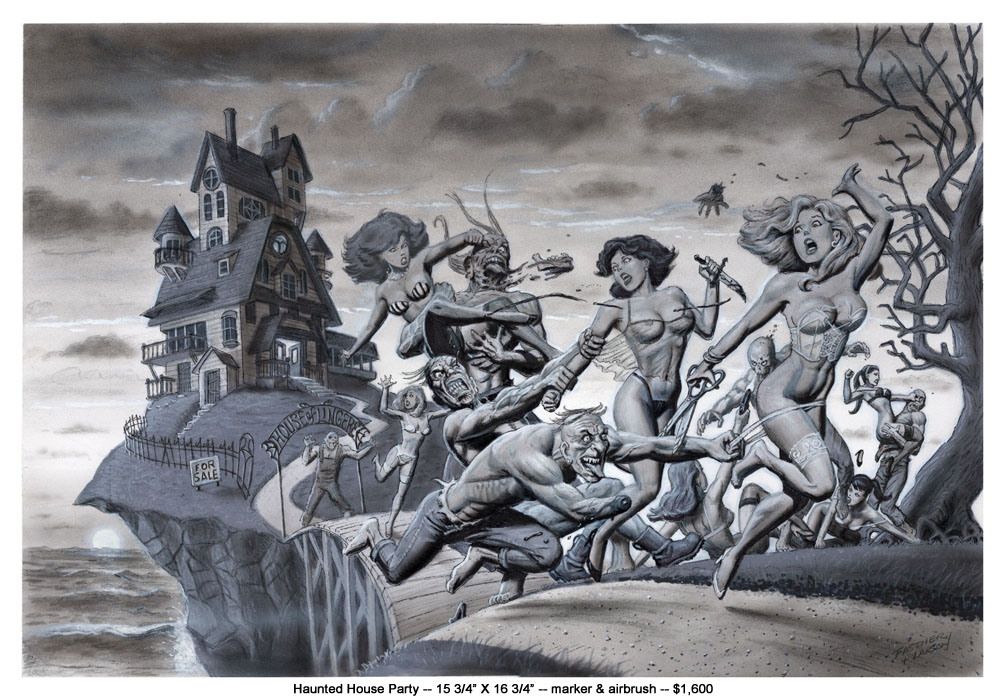
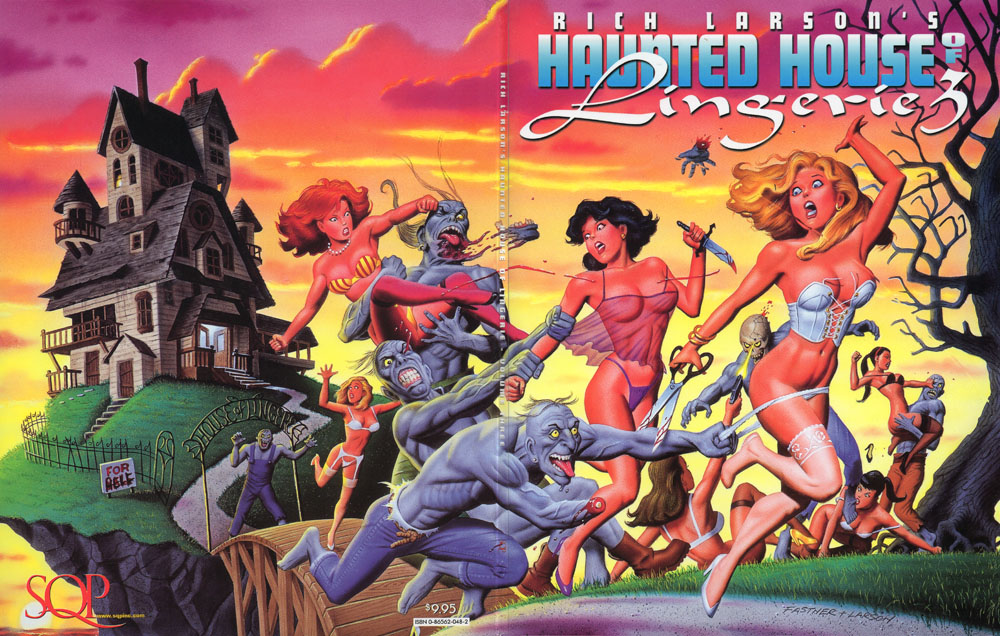
Haunted House Party study
-- A tonal study for our wraparound cover to Haunted House of Lingerie
Vol. 3.
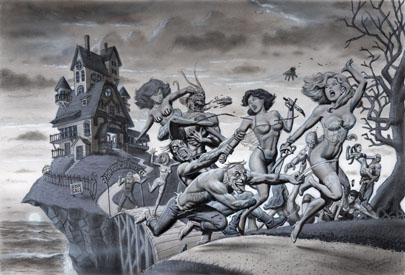
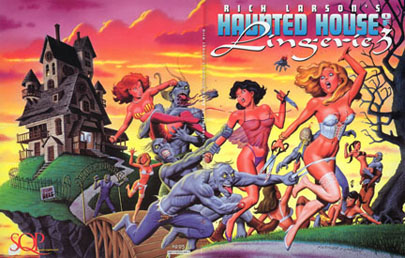
Twenty years on, our Haunted House series continues to sell at
a healthy clip, and all three first printings are virtually sold out.
This study has all the classic F&L elements: lustful dead guys,
scantily-clad babes and girl-on-zombie mayhem. It's our Guernica.
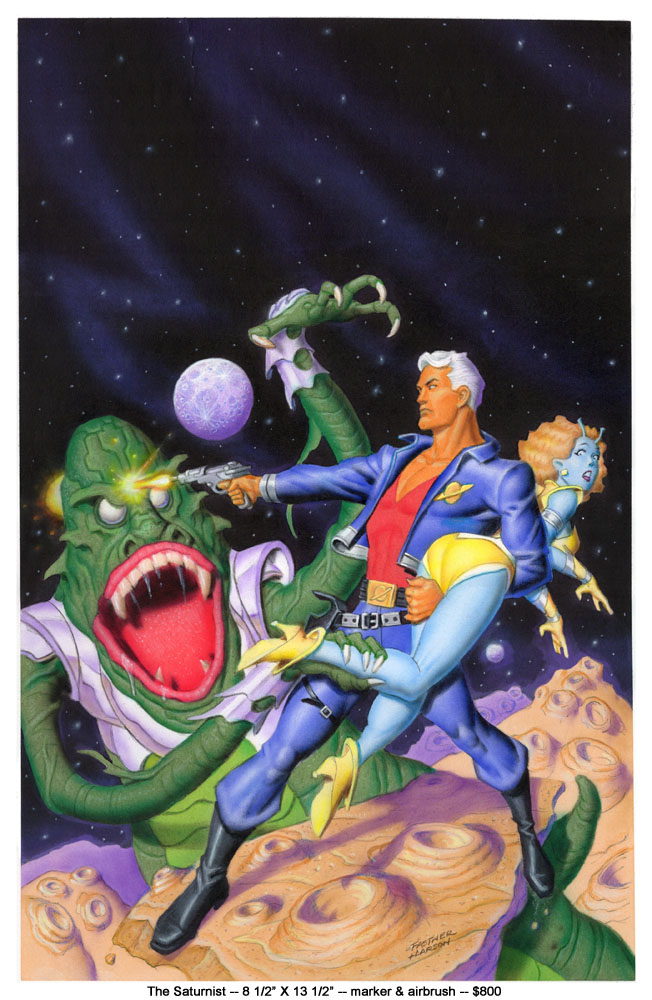
The Saturnist -- Mansion Media publisher and longtime F&L
pal/supporter David Watkins commissioned this painting for a story in
his Dark Spectrum anthology. From a press release: "Equal parts Flash
Gordon and Doc Samson, The Saturnist and his sexy, four-armed
companion, Samma [her left arms are hidden in our painting, smart guy,] fight their way through a combative cult while trying
to escape an inert ice planet."
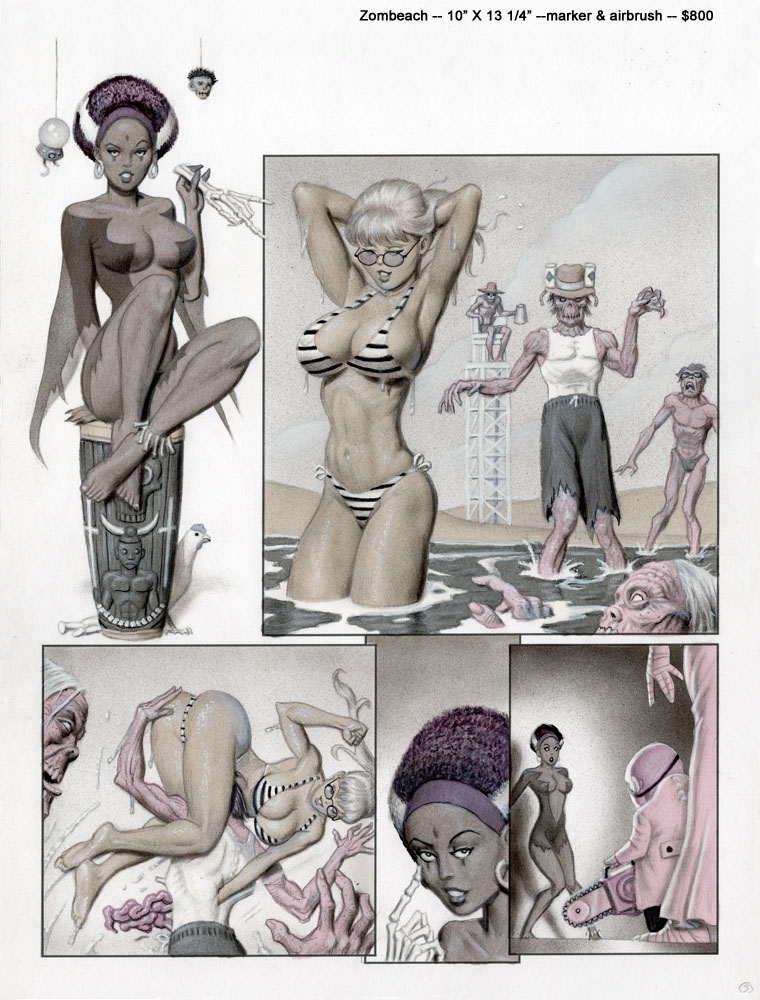
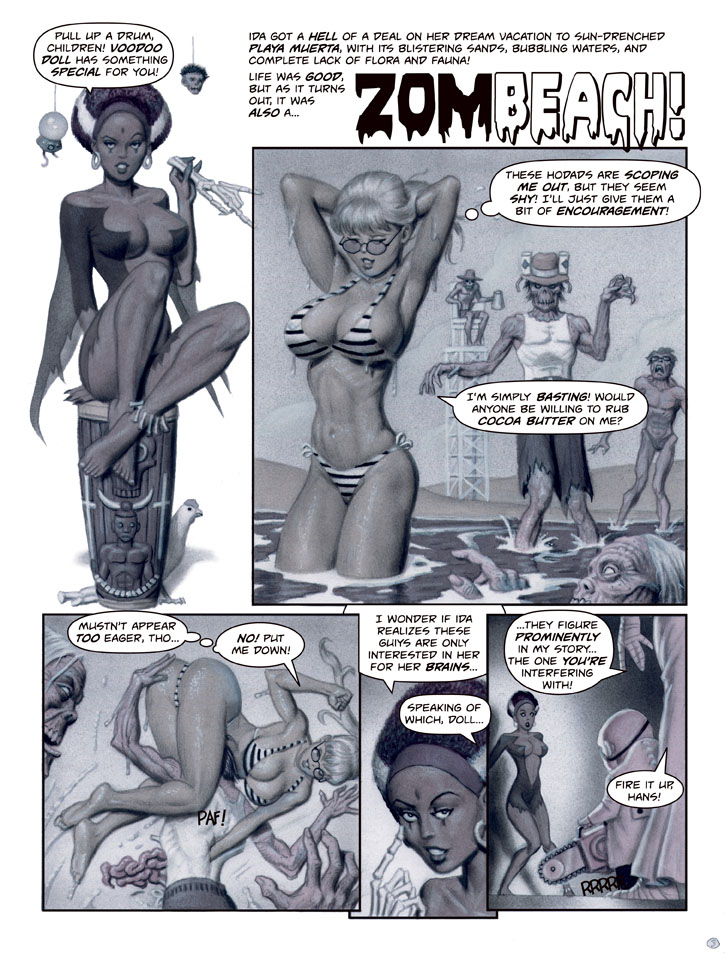
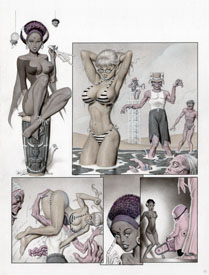
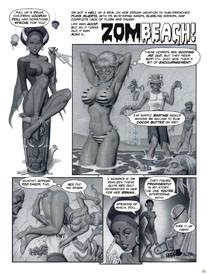
Zombeach -- If
you have fond memories of our horror hostess tribute from Sexy Dreams,
here's your chance to own an original page from that story. Yet another
exquisite display of zombie (and bikini) abuse in living dead grayscale.
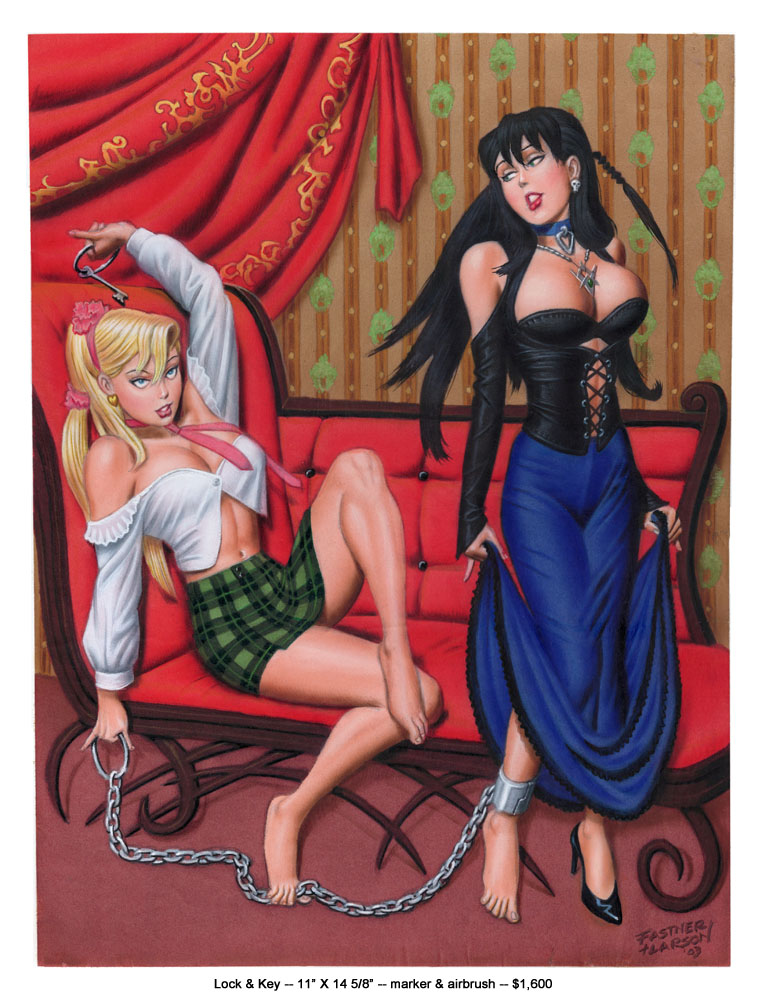
Lock & Key
-- This fully realized painting -- one of the largest still in our
possession, and among the first depictions of The Girlies™ -- has a
couple of minor imperfections (some rippling at the bottom edge and a
barely noticeable crease in Dark Girly's skirt) as the result of a
tense peel and remount session. In all other aspects, it's as
colorfully perverse as the day Steve finished it twenty years ago.
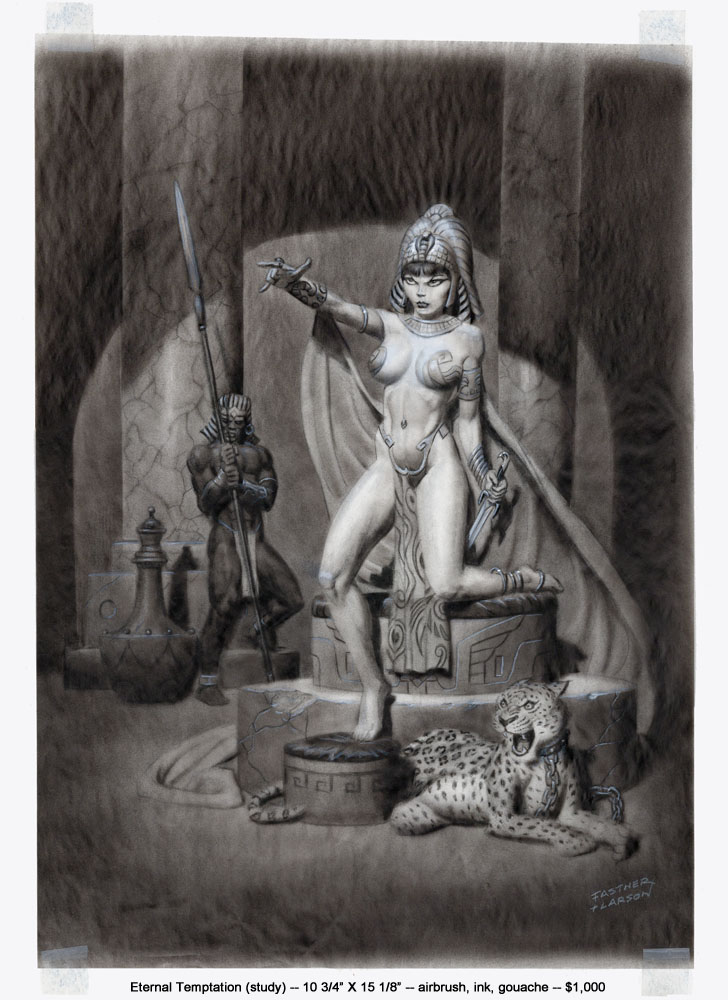
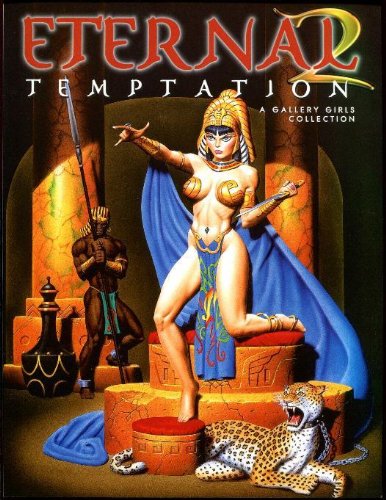
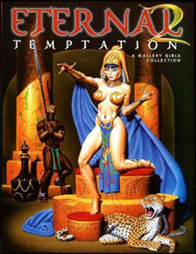
Eternal Temptation study -- Steve's full-size grayscale study for our cover of SQP's Eternal Temptation 2 artbook (2001.)
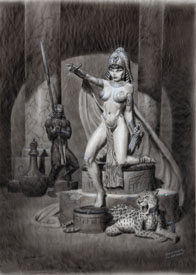
"Take my leopard back to his own bed!"
This preliminary was done in mixed media on tracing paper (hence the
ripples,) and is taped at the corners to a sheet of board to protect it
from damage. It's comparatively huge, and you'll not see its like
again, since we're no longer crazy enough to do multiple full-size
studies.
Update 8/18/24: Seven new originals up for sale:
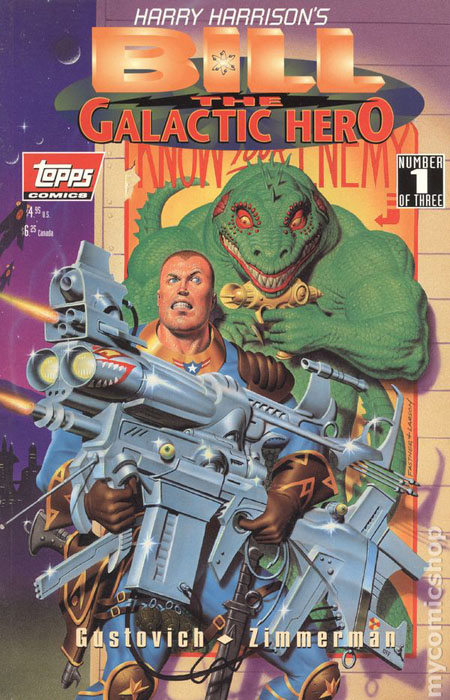
Bill the Galactic Hero -- Our full-size study for the first issue cover features the first of Rich's many attempts
at rendering Bill's expression in line with the publisher's virtually
un-nail-downable specifications. We think it's funnier than the one
they went with, but you be the judge.
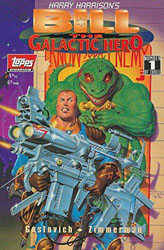
Et tu, lizard guy?
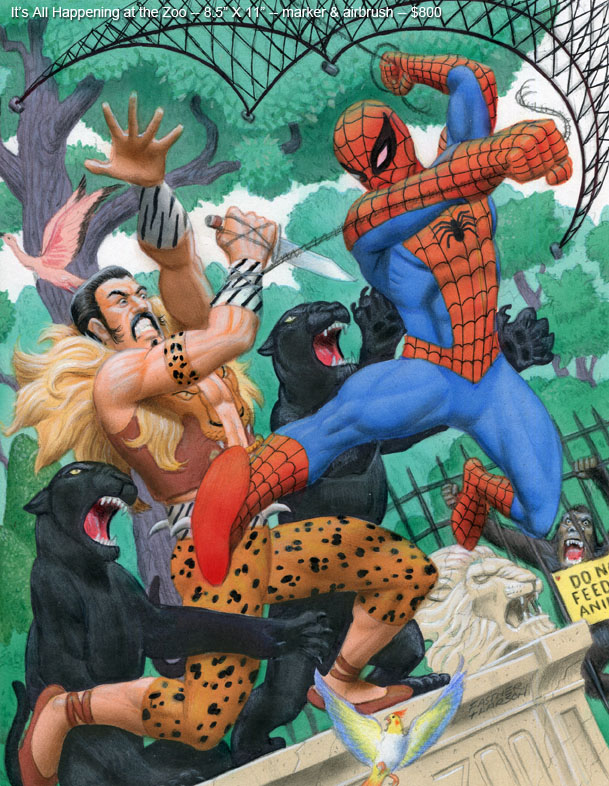
Spidey vs. Kraven -- Fully rendered color study for a private commission.
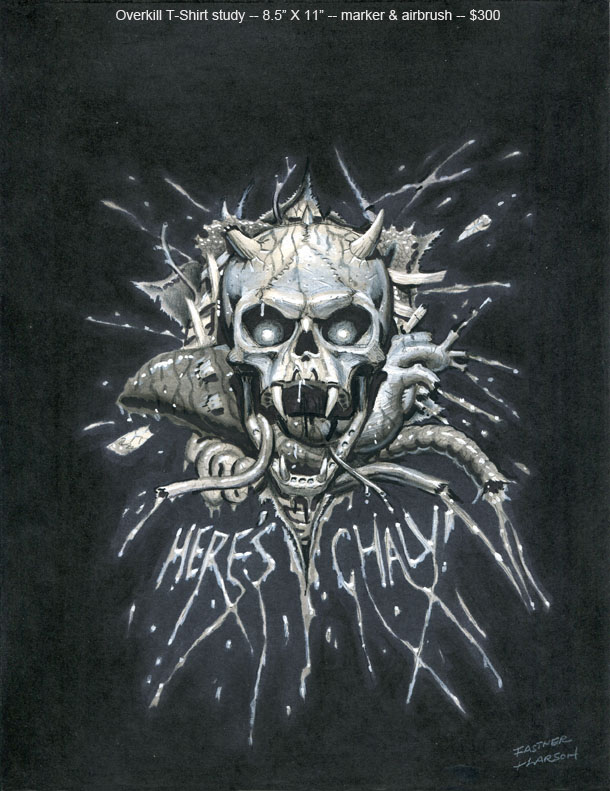
Overkill t-shirt study
-- We did two album covers and a bunch of t-shirt designs for these
timeless shredders; this study of their loveable chestbursting mascot
is one of the few O-Kill pieces we have left.
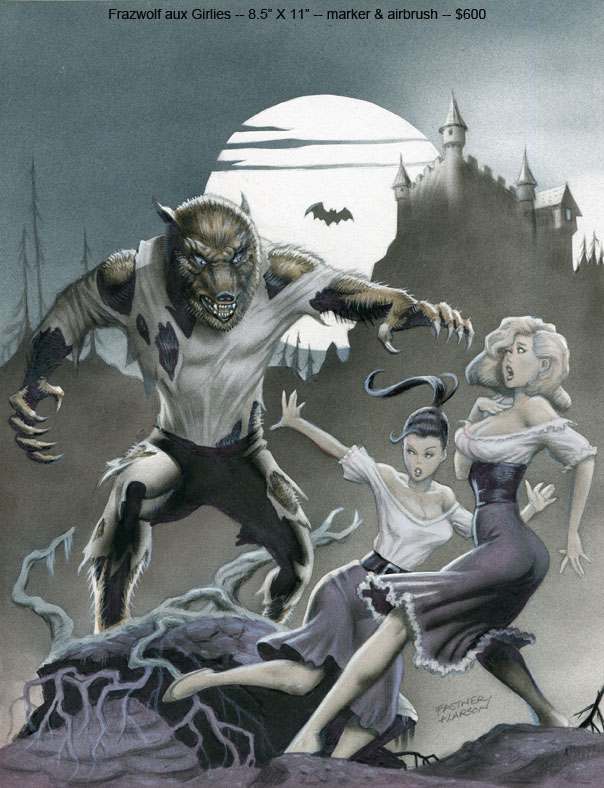
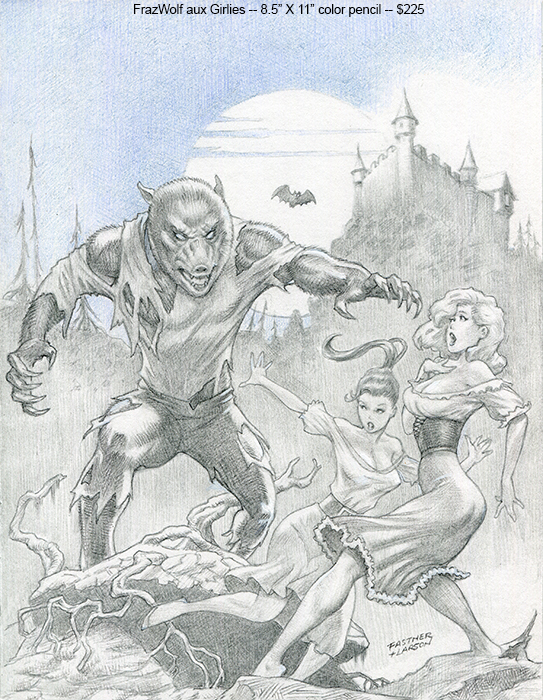
Frazwolf aux Girlies
-- Our shameless theft of the werewolf (and background!) from
Frazetta's cover for Creepy #4. We threw in a couple of our patented
damsels because we just can't help ourselves.
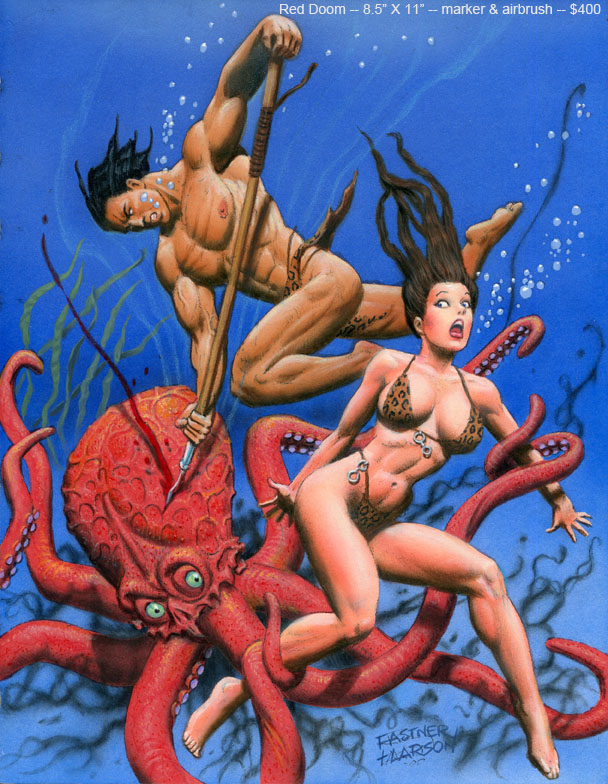
Red Doom
-- Finished marker & airbrush painting from 2000 based on a pencil
drawing commissioned by an ERB fan. It was published in the Art
Fantastix F&L Gallery collection.
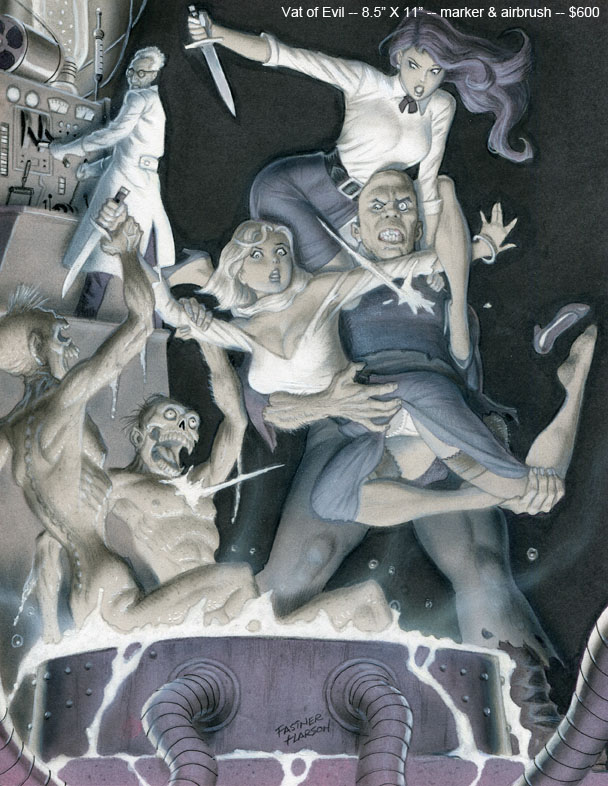
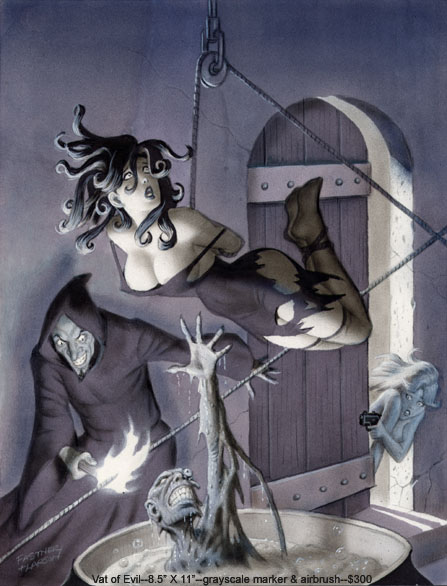
Vat of Evil -- More fun with monsters, maidens and mad scientists.
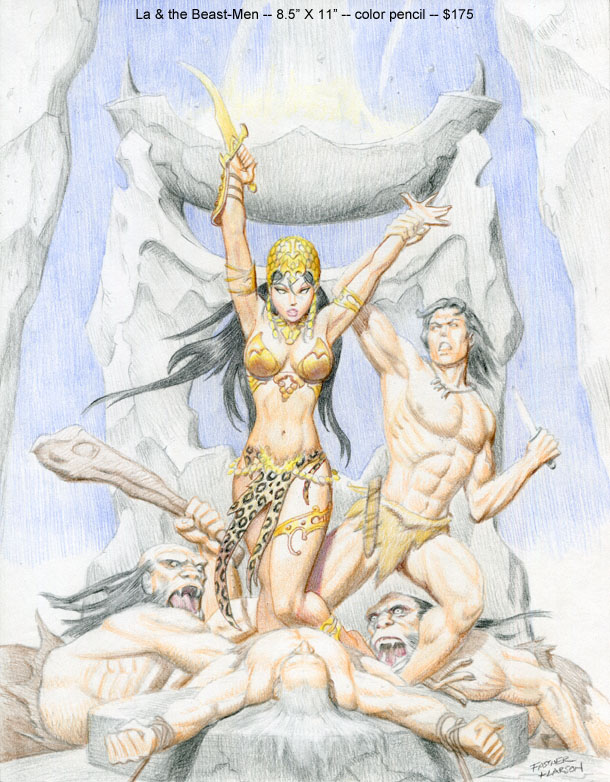
La & the Beast-Men -- Color pencil study for a private commission painting.
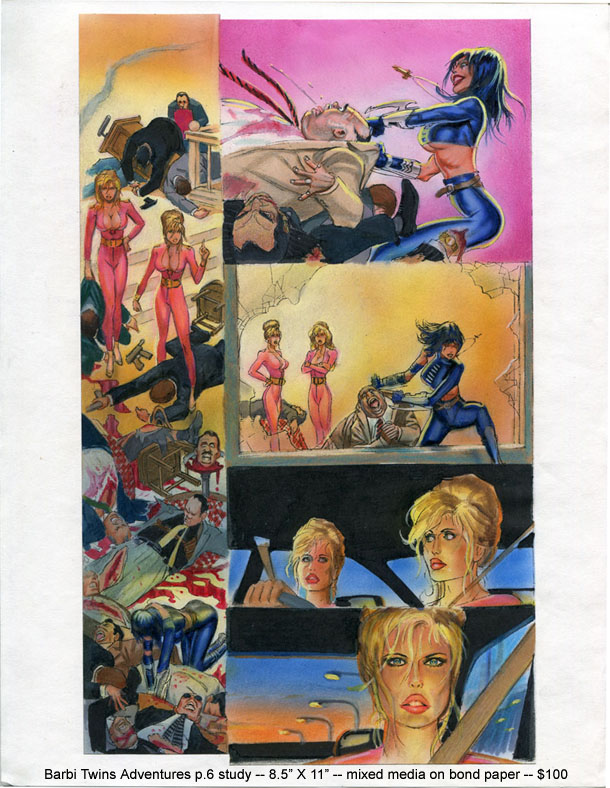
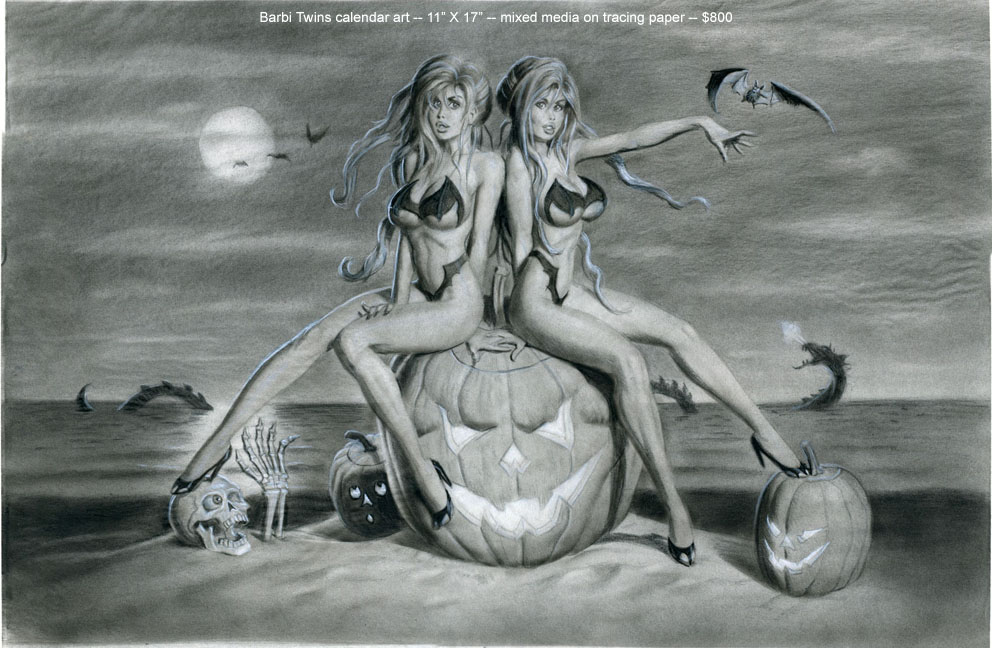
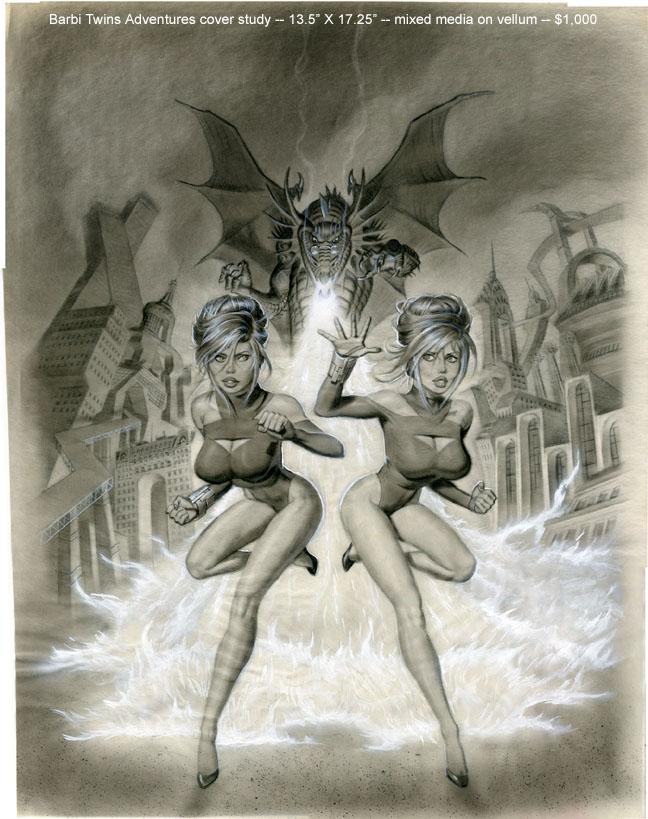
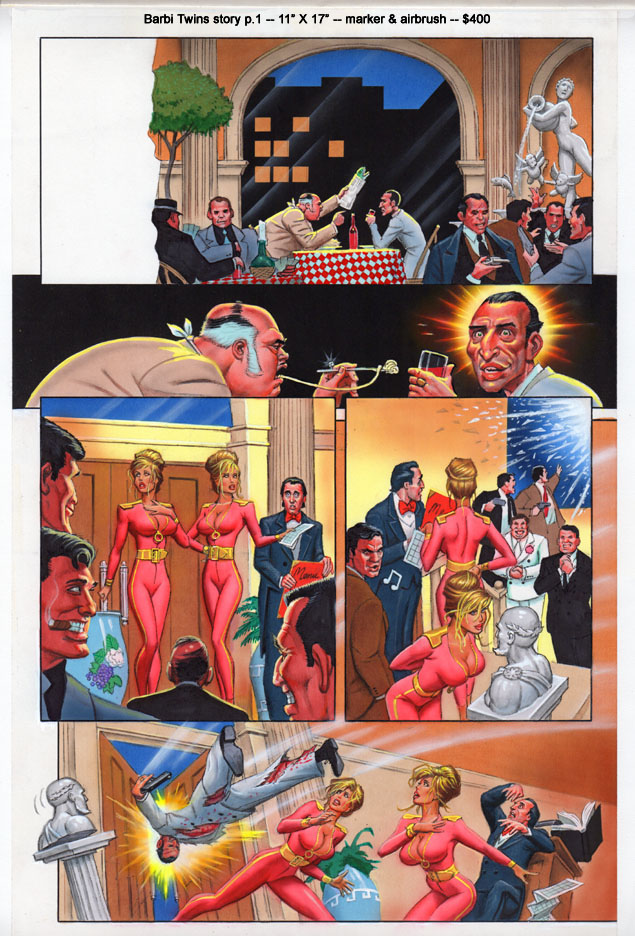
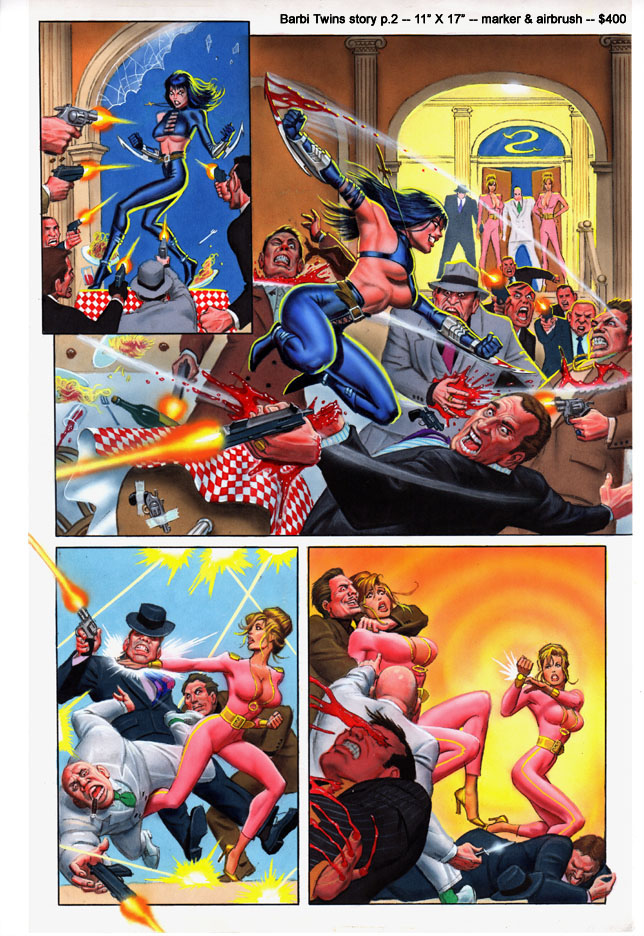
At 11" X 17" (story pages) and 14" X 19" (calendar art), these Barbi Twins originals
are among the largest we still have in our inventory...and we don't
plan on working this big again. So if you're looking for a double-sized
shot of bosomy ultraviolent original art action, check 'em out!
UPDATE: All of our pages from Barbi Adventures #1 have sold; likewise
our Barbi calendar art original. For those who'd still like to lay
hands on the girls without getting their fingers broken, we've made
available some tonal studies from the comic and the calendar. Click on
the thumbs below for details.
|
|